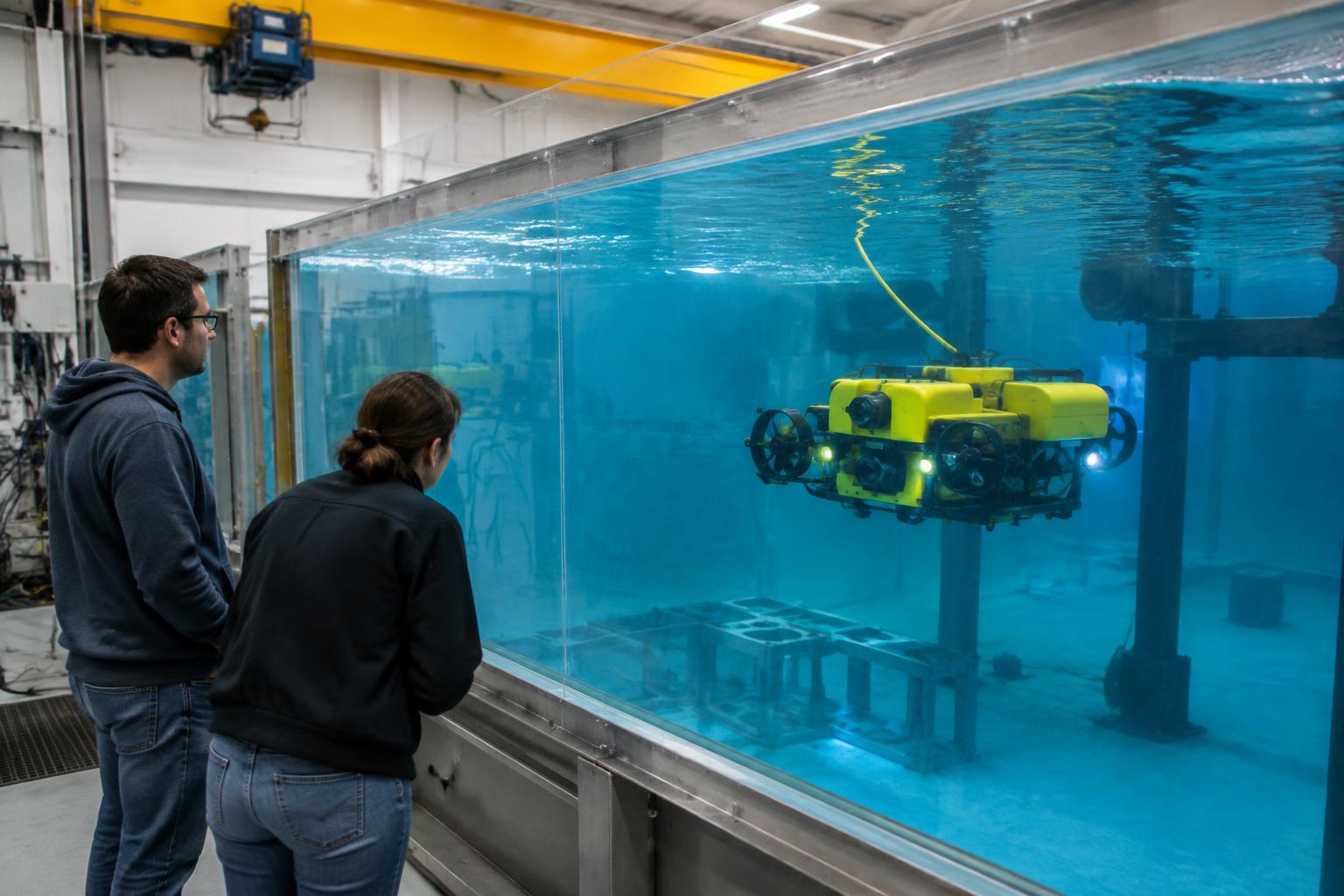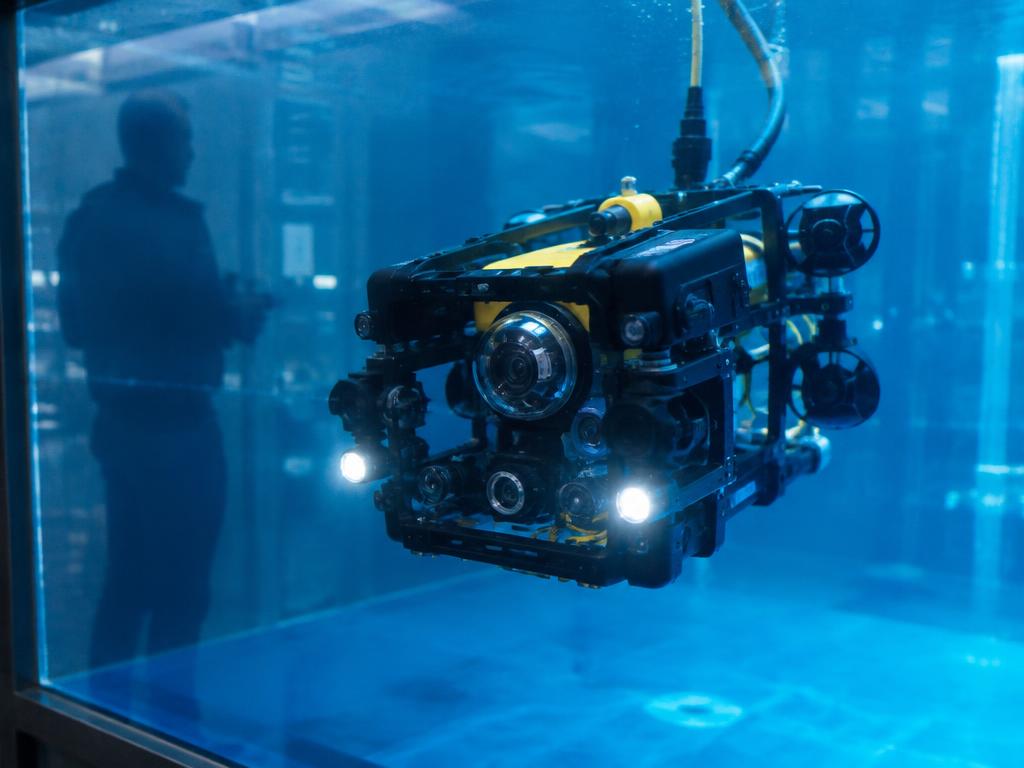
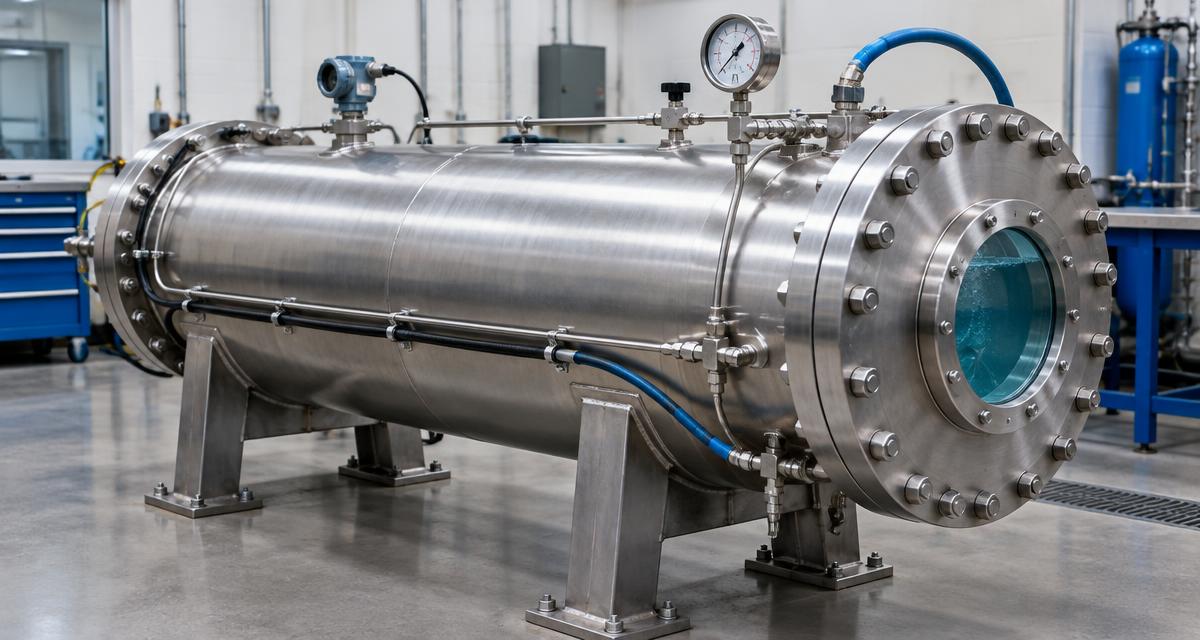
Underwater pressure testing allows engineers to evaluate cameras, sensors, connectors, electronics, and subsea equipment under controlled pressure conditions. The testing vessel must be designed around the required pressure, test medium, equipment geometry, and inspection requirements. Adding a viewing window introduces additional design constraints that must be considered from the beginning.
Why pressure changes vessel design
Water pressure increases with depth. In seawater, pressure rises by approximately 1 bar for every 10 meters of depth, in addition to atmospheric pressure. A test chamber can reproduce a selected pressure without requiring the equipment to be tested at that actual ocean depth.
The required operating pressure is only one design input. Engineers must also consider the vessel’s dimensions, material properties, loading conditions, pressure cycles, penetrations, and applicable design standards. The vessel must be evaluated as a complete system rather than as a steel enclosure alone.
The limitations of acrylic viewing ports
Acrylic can provide a clear view into a test chamber, but a viewport is a pressure-bearing component, not simply a transparent panel. Its geometry, thickness, supported area, material condition, sealing arrangement, and interface with the vessel all affect its performance.
Increasing the viewing area can complicate the design because the surrounding structure must transfer loads around the opening. Acrylic also exhibits time-dependent deformation, and repeated pressure cycles can influence long-term performance. Material compatibility, temperature, surface damage, and inspection requirements must be considered.
A viewing port suitable for an atmospheric immersion tank must not be assumed suitable for a pressurized chamber. Pressure-rated viewports require application-specific engineering and verification.
Ports, seals and instrumentation
Electrical feedthroughs, hydraulic connections, tubing, and sensor penetrations create additional design considerations. Their locations and interfaces must account for pressure loads, sealing, maintenance, and any forces transmitted by connected equipment.
For repeated testing, engineers should also define pressure-cycle requirements, instrumentation, data logging, inspection intervals, and acceptance criteria.
Choosing a testing system
An open immersion tank is often sufficient for testing buoyancy, maneuverability, cameras, and equipment operation in water. A pressure vessel is appropriate when the test requires elevated pressure. Some programs need both systems.
Factory Fish Tanks works with custom tank and acrylic fabrication requirements for specialized testing applications. Projects involving pressure vessels and viewing ports require the applicable engineering, code review, and verification to be established before fabrication.
Technical reference: National Oceanography Centre testing facilities documents separate immersion and pressure-testing systems. IMCA guidance on acrylic plastic viewports discusses viewport inspection and use in pressurized systems.